
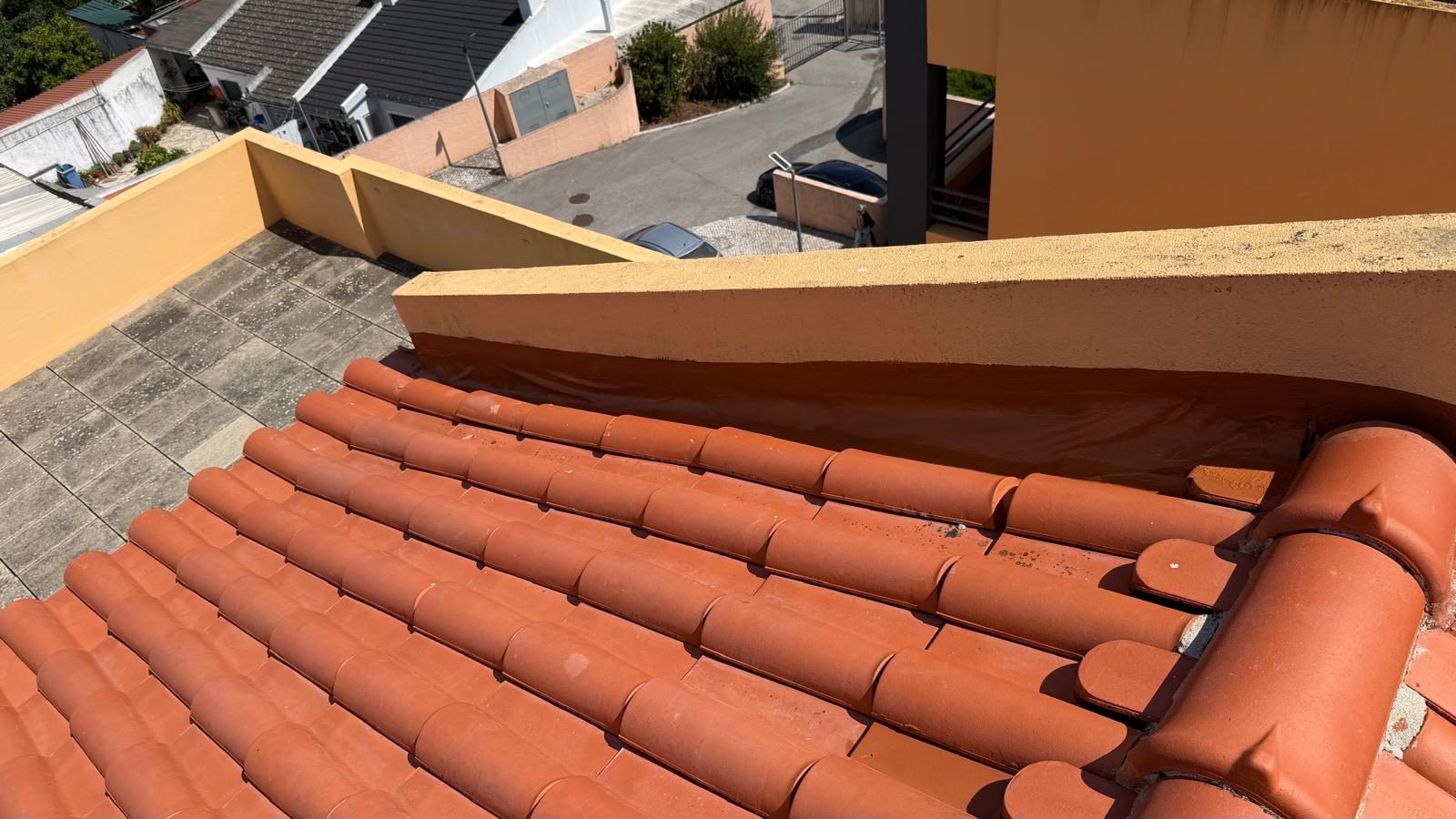
Water does not come in through the middle of a roof. It comes in at the abutment.
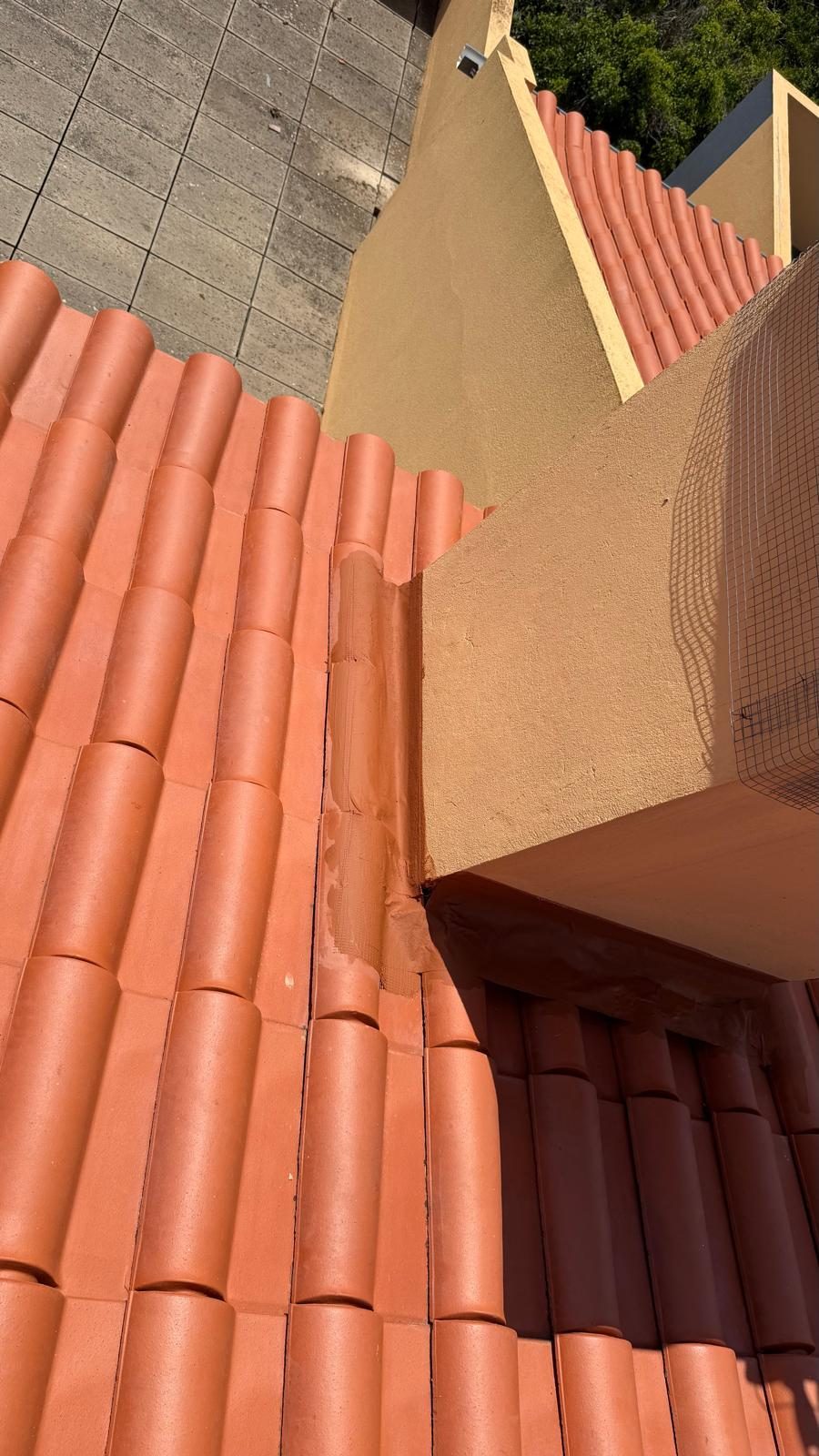
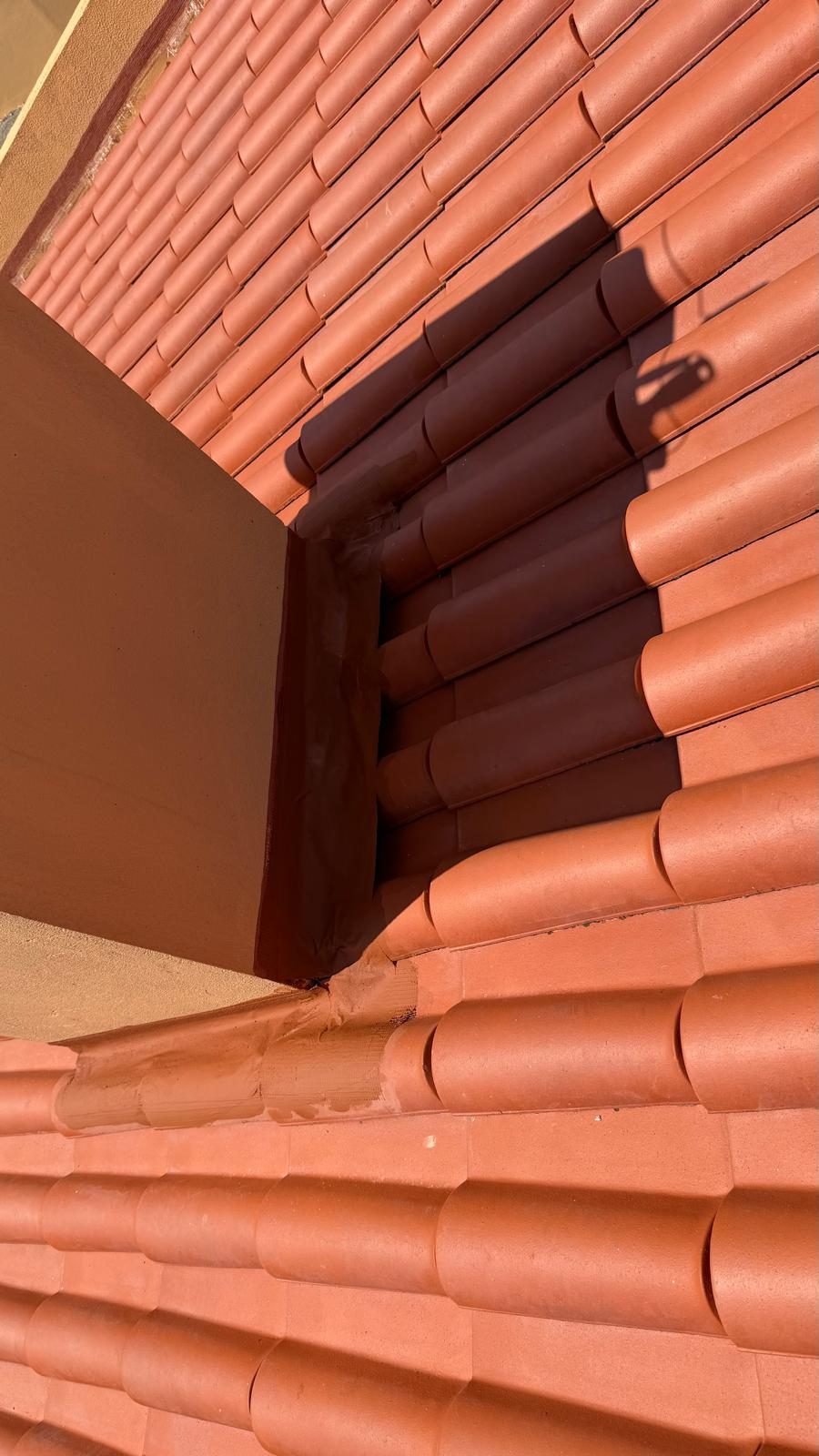
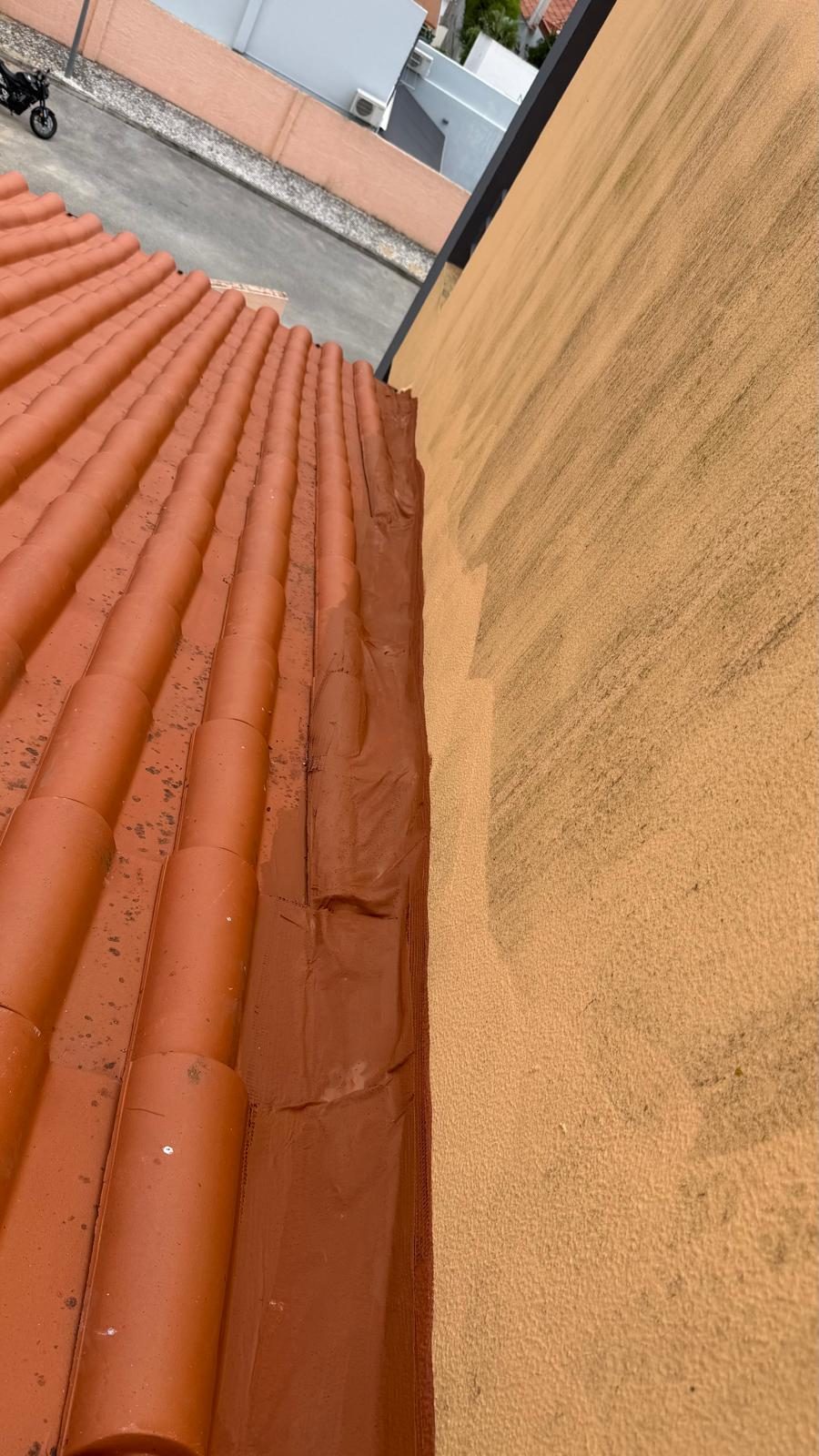
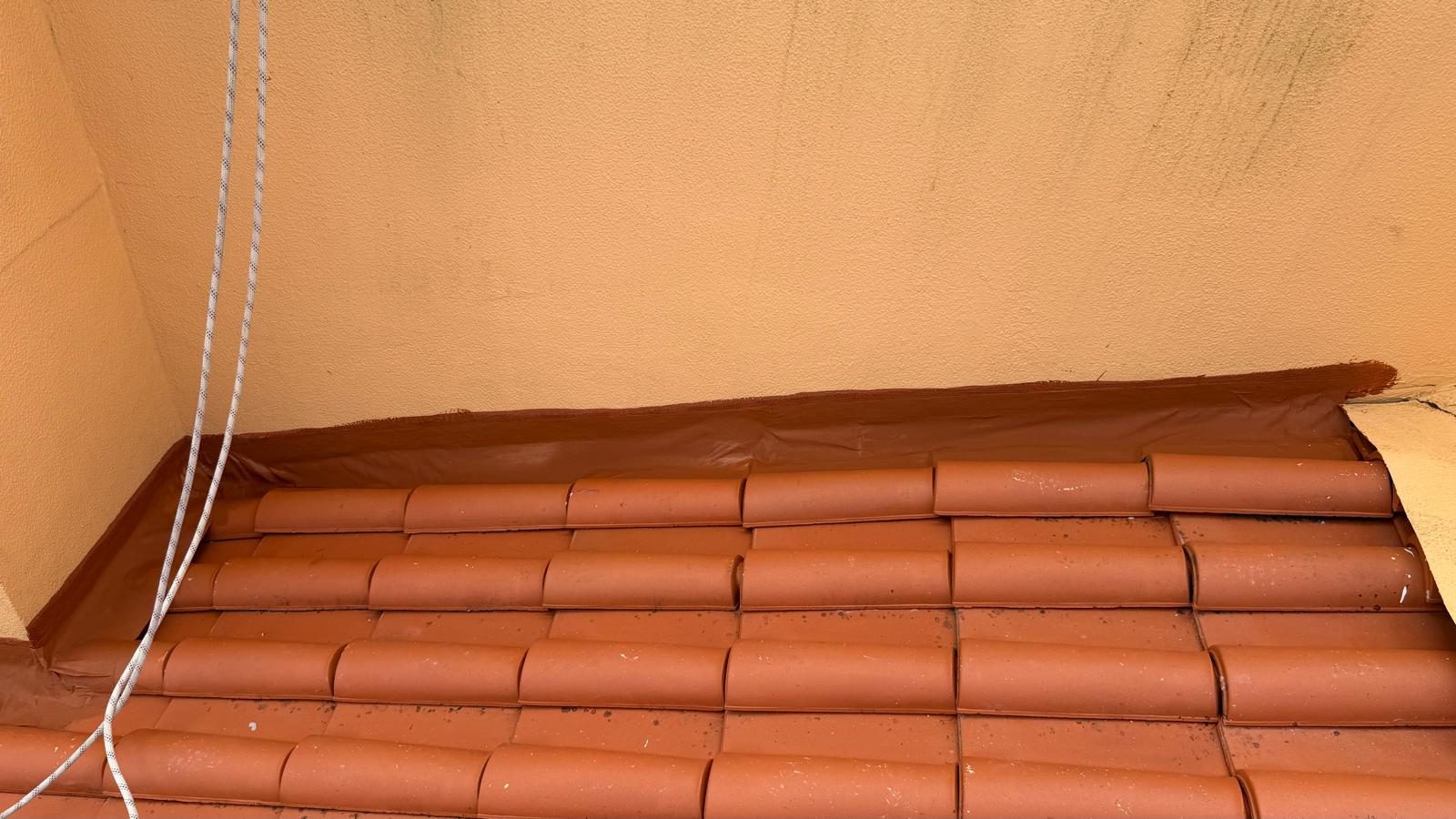
We waterproof the points where the roof meets something else: parapets, gable walls, chimneys, gutters and downpipes. That is where water ingress starts, and that is where the barrier has to be continuous — in bituminous matting or in reinforced liquid membrane, depending on the substrate and the geometry.
Site visit and quote with no obligation. We reply within 24 working hours.
What the service covers
When the roof is already letting water in
Water ingress rarely shows up below the place it got in. Water runs between the tile and the substrate, or across the slab, until it finds the first crack to come down through. The patch on the ceiling tells you an abutment is open — it does not tell you where.
How we work
Survey of the abutments
We walk the whole roof: junctions with parapets and gable walls, chimneys, gutters, downpipes and vents. Every point is photographed — the quote comes out of this, itemised abutment by abutment.
Preparing the substrate
Removal of mortar that no longer seals, lifting the tiles along the line of the abutment, cleaning and drying. Over dust or loose material, neither the matting nor the membrane will bond.
Primer and reinforcement
A primer matched to the substrate, plus reinforcement at corners, changes of plane and penetrations. Those are the points that open first once the material starts moving with the heat.
Application and checking
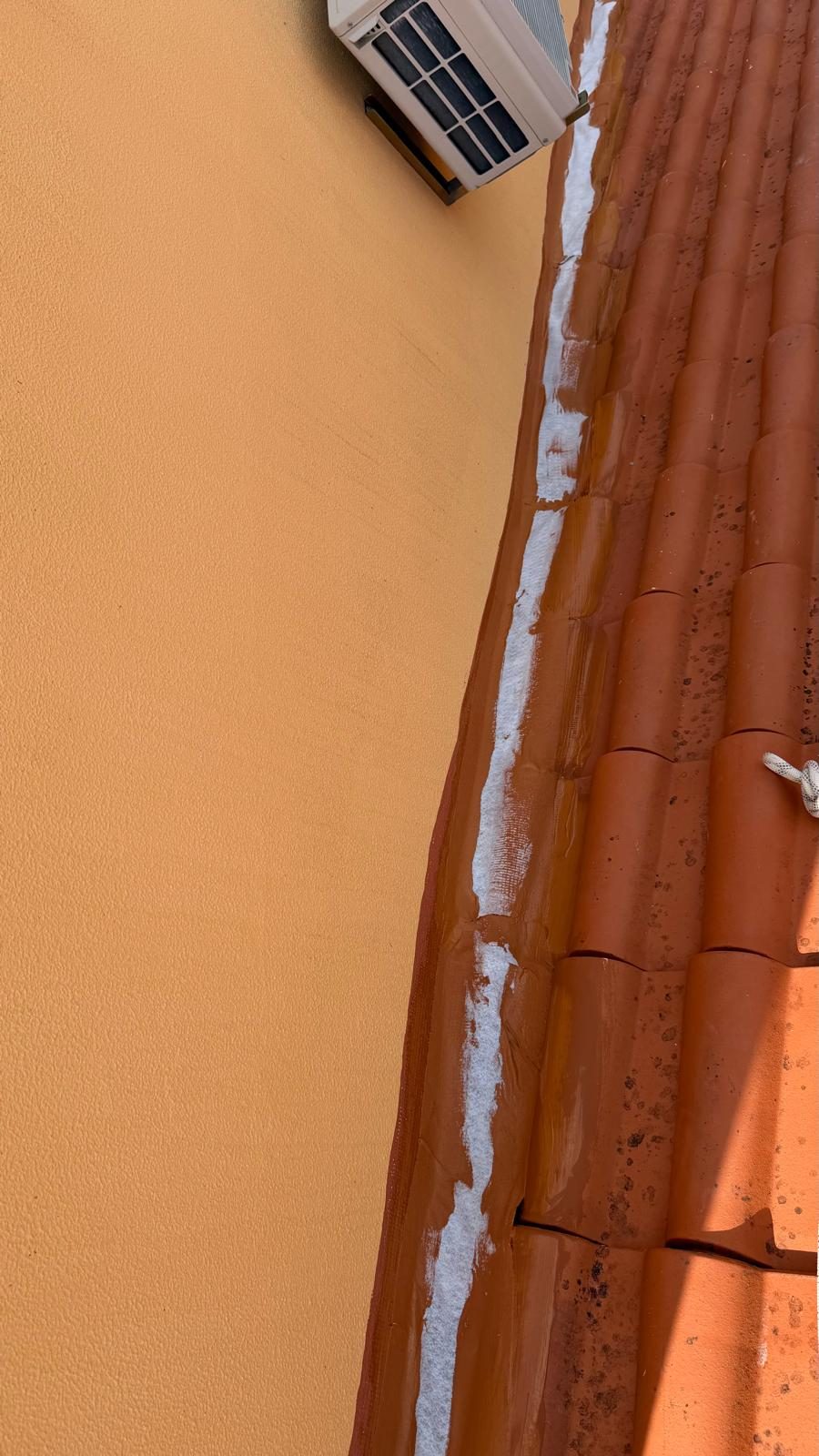
Bituminous matting with sealed laps, or liquid membrane reinforced with fleece. At the end we wet the treated abutments down and check inside with the client.
Where the barrier has to be continuous
Waterproofing is not the same as hydrophobic treatment.
A hydrophobic treatment seals the porosity of the tile and makes water run off the surface. It is worth having, and we do it too — but it will not close an open joint. Waterproofing creates a new, continuous barrier at the abutment, lapped over the substrate and up the wall. Once the patch is on the ceiling, a hydrophobic treatment on its own will not fix it.
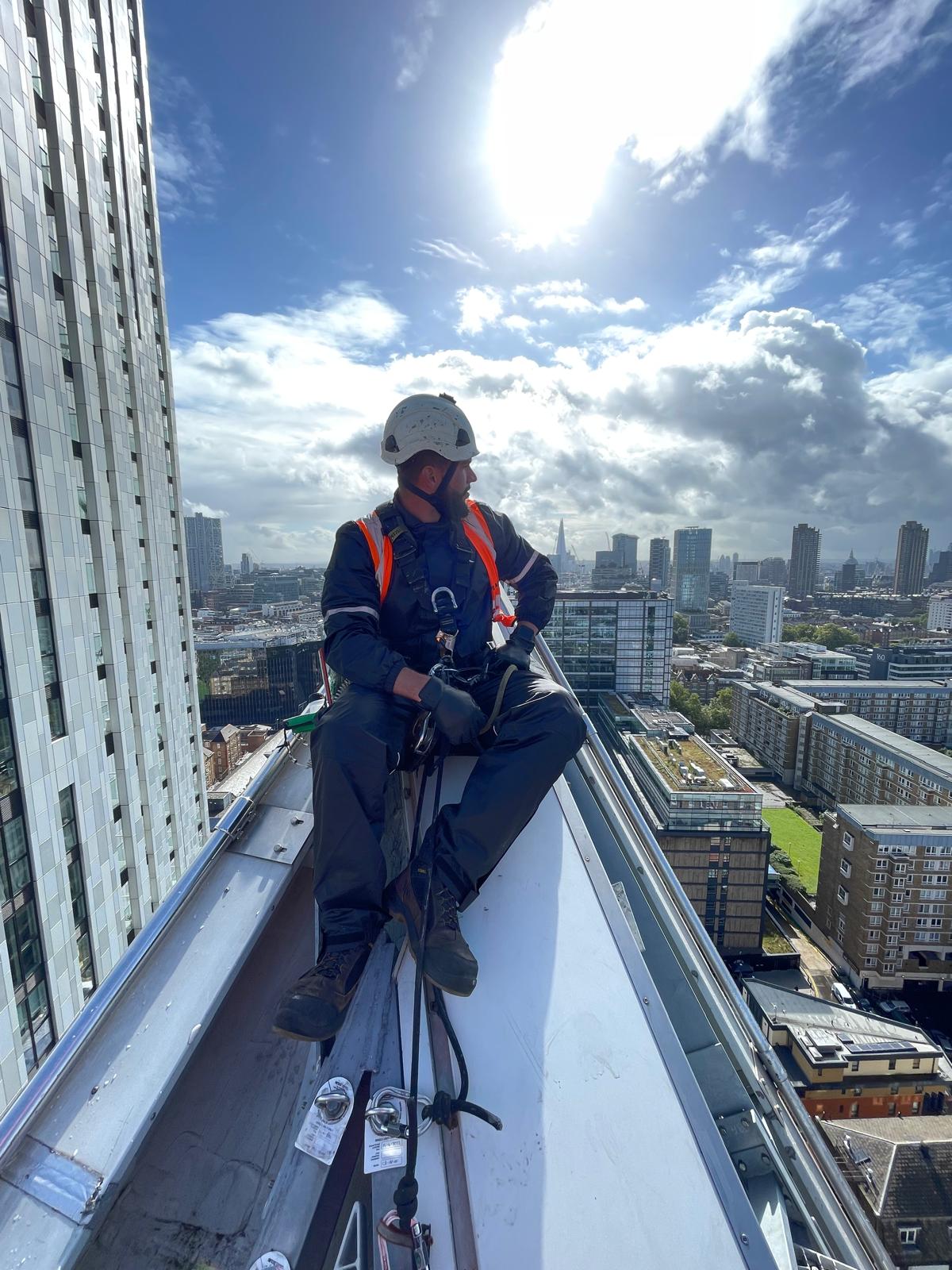
The detail is always at the edge — and nobody works the edge untied.
Parapet, eaves, gable, chimney: the place water gets in is nearly always the place the roof runs out. This work happens at the edge of the slab or the tiles, and that is where a twin-rope system on independent anchor points stops being a technical detail and becomes the only reason the team can work with both hands free.
Timescales and what drives the quote
We give a preliminary figure from photographs, and a fixed quote itemised abutment by abutment after a site visit — always free of charge.
Related services
Roof cleaning
Moss and lichen hold water on top of the tile and break down the abutment beneath it.
See service →Hydrophobic treatment
Seals the porosity of the tile after cleaning. It complements waterproofing, it does not replace it.
See service →Facade painting
For when the run-off has already marked the wall below the parapet.
See service →Frequently asked questions about roof waterproofing
The patch is in a top-floor room. Is the problem really directly above it?
Almost never. Water gets in at an open abutment and runs between the tile and the substrate, or across the slab, until it finds the first crack to come down through. It can surface metres away. That is why the survey covers the whole roof, not only the area above the patch.
Bituminous matting or liquid membrane?
It depends on the substrate and the geometry. Matting works well on long, regular planes, with sealed laps. Liquid membrane reinforced with fleece suits corners, pipes and irregular shapes better, where matting would mean cuts and joins — and every join is a weak point. On many roofs both are used, each where it is the more reliable of the two.
Would a hydrophobic treatment not sort this out?
Not if the joint is open. A hydrophobic treatment seals the porosity of the tile and makes water run off the surface, but it will not close a crack in an abutment and it is no substitute for a barrier. They are different services, and often complementary: close the abutment first, then treat the tile.
Do the tiles have to come up?
Only along the line of the abutment, where the barrier has to pass beneath them — which is the difference between an abutment that lasts and one that opens up the first summer. The lifted tiles are bedded back at the end; the rest of the roof is left alone.
Can it be done at any time of year?
No. The substrate has to be dry and the forecast clear for the hours after application, otherwise the product does not cure and the barrier is compromised from the start. In Portugal the usable window typically runs from March to October. Outside it, we plan the work for the first spell of settled weather.
Do residents have to move out?
No. The work is carried out at roof level, from outside. We only ask for access inside at the end, to check the rooms where the patch was after we have wetted the treated abutments down.
Do you give a guarantee?
Yes, on the application. The period is stated in the quote and follows the guarantee on the system applied. The photographic report serves as a record of what was done and at which point on the roof.
Send photographs of the roof and of the patch inside.
With photographs of the abutment and of where the damp is showing, we can give you a preliminary figure before the site visit even happens.
+351 933 369 927