
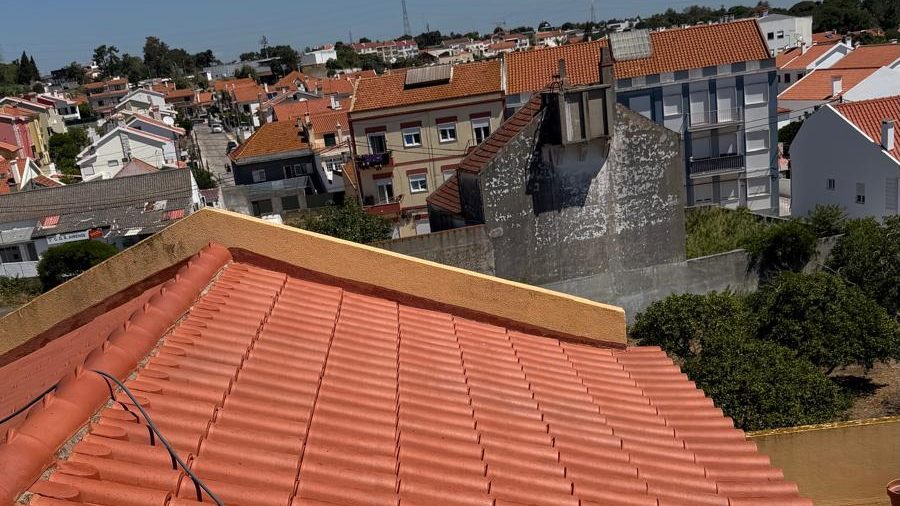
Moss is not dirt. It is standing water sitting on the tile.
Moss and lichen grip the tile and hold damp against it, so it stops drying out between downpours. The tile saturates, winter opens it from the inside, and whatever comes loose ends up blocking the gutter. We clean at a pressure set to what the substrate can take, take out what has rooted itself, and collect the debris before it reaches the drainage.
Site visit and quote with no obligation. We reply within 24 working hours.
What the service covers
When the roof already needs cleaning
Moss does not ruin a tile by being there. It ruins it by holding water against it. Each clump works as a sponge that stops the surface drying out, and it is that permanent damp that opens up the porosity of the clay and makes it crack at the first frost.
How we work
Survey and access
We walk the roof slope by slope and record what is up there: broken tiles, areas that will not take a load, rooflights and anchor points. The quote and the access plan both come out of this.
Protection and clearing
We protect rooflights, vents and openings, and clear the gutters and downpipes before anything gets wet. If the water has nowhere to go, the moss that comes loose will block whatever was still draining.
Cleaning at controlled pressure
We work from the top down and along the run of the tile, at a pressure set to what the substrate can take. Too much pressure breaks tiles and forces the joints; too little leaves the root of the lichen in place and the green is back in the first wet season.
Clearing up and checking
We collect the debris from the roof, the gutters and the ground, check the drainage with water and walk the roof with the client. The photographic report is handed over at the end.
The roof, from the first day to the last
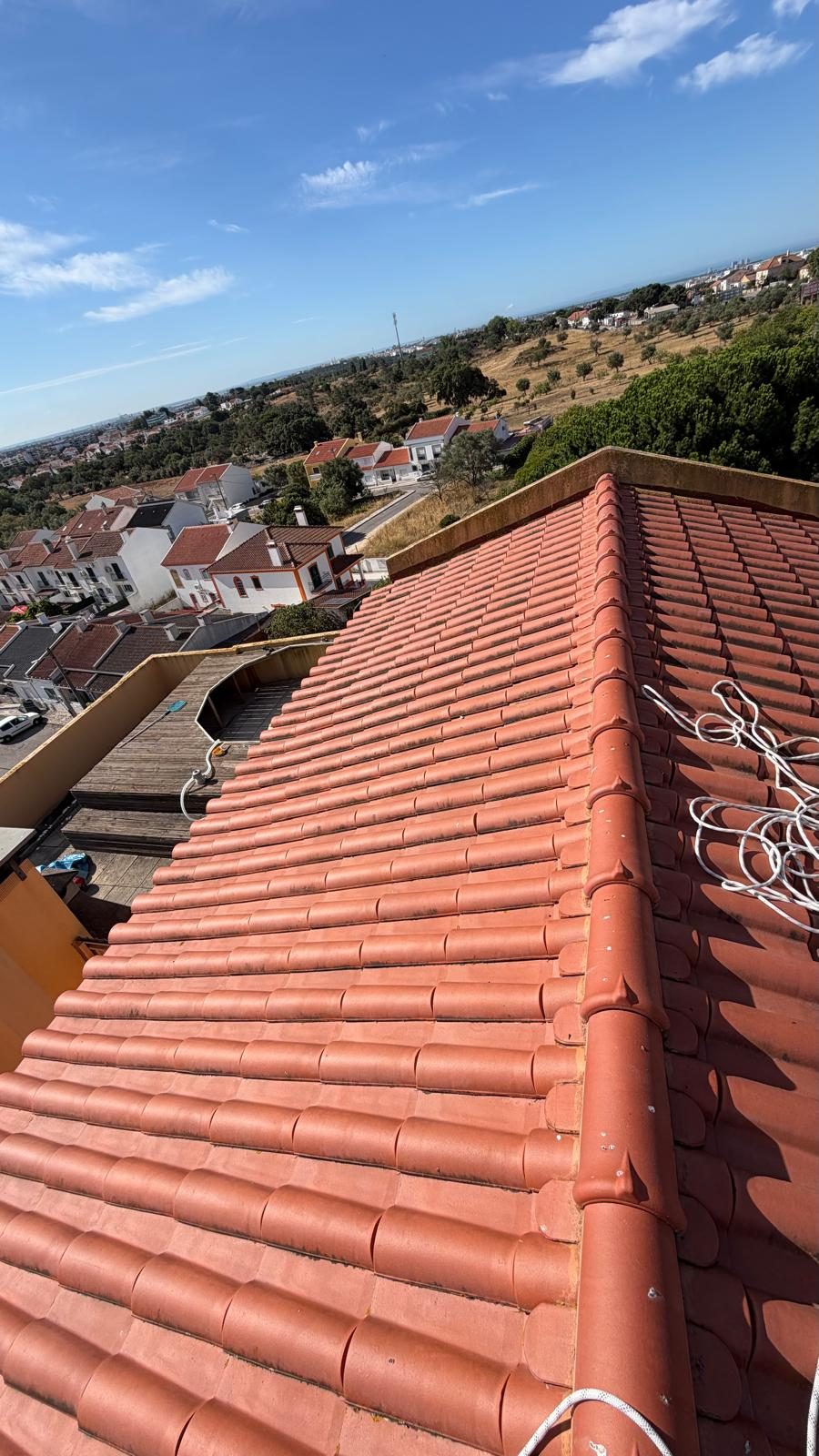
House with curved clay tiles
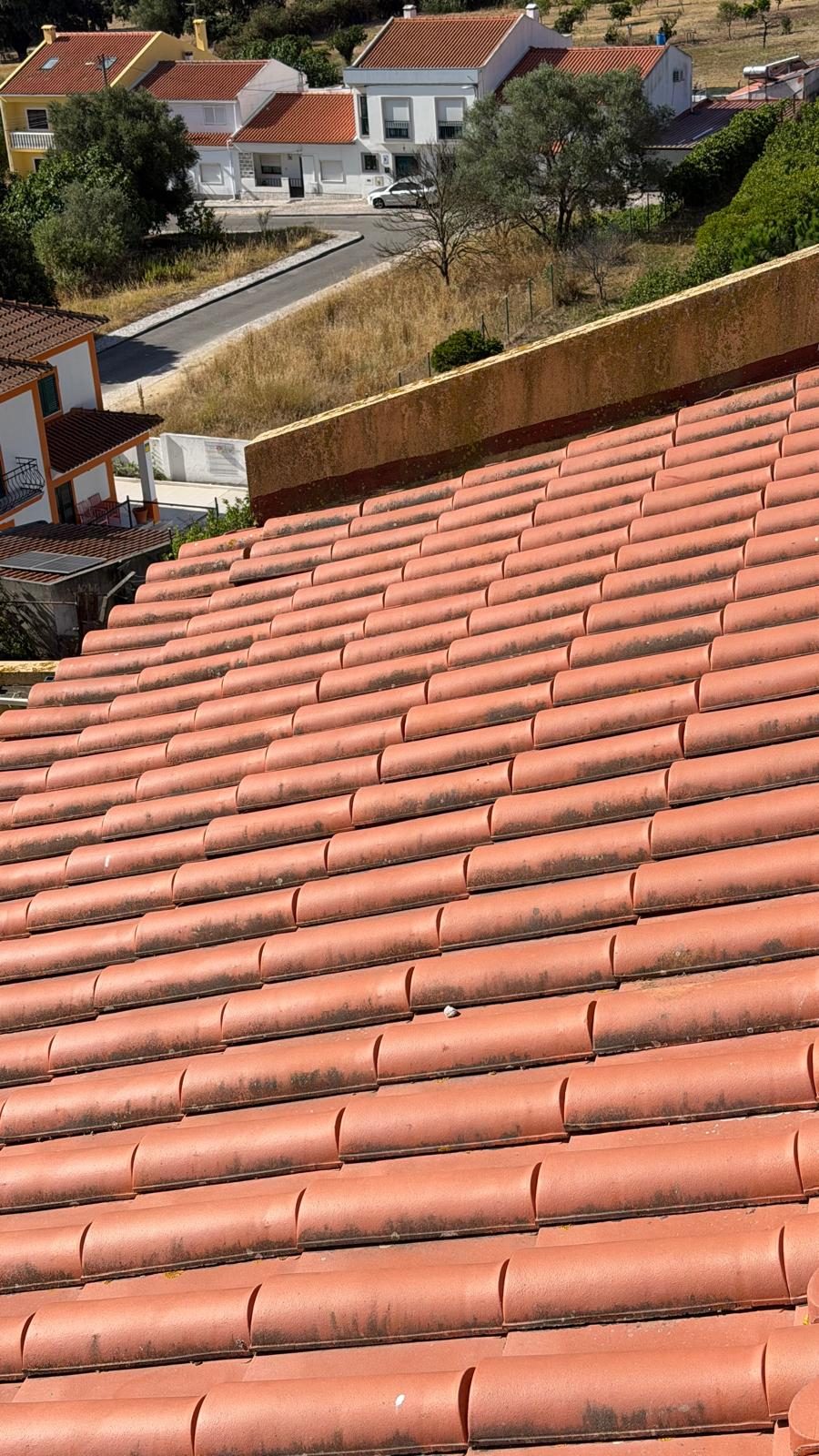
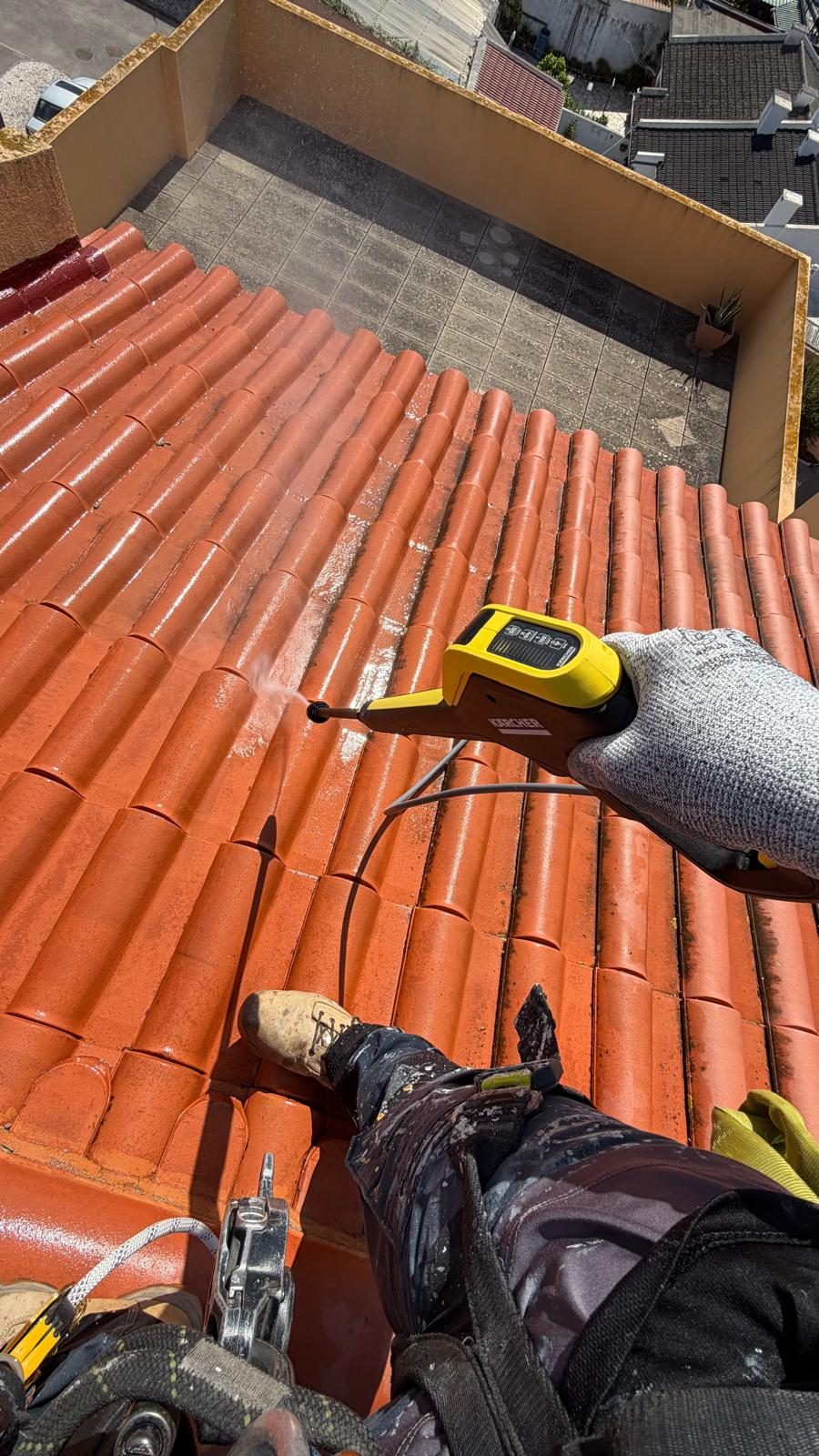
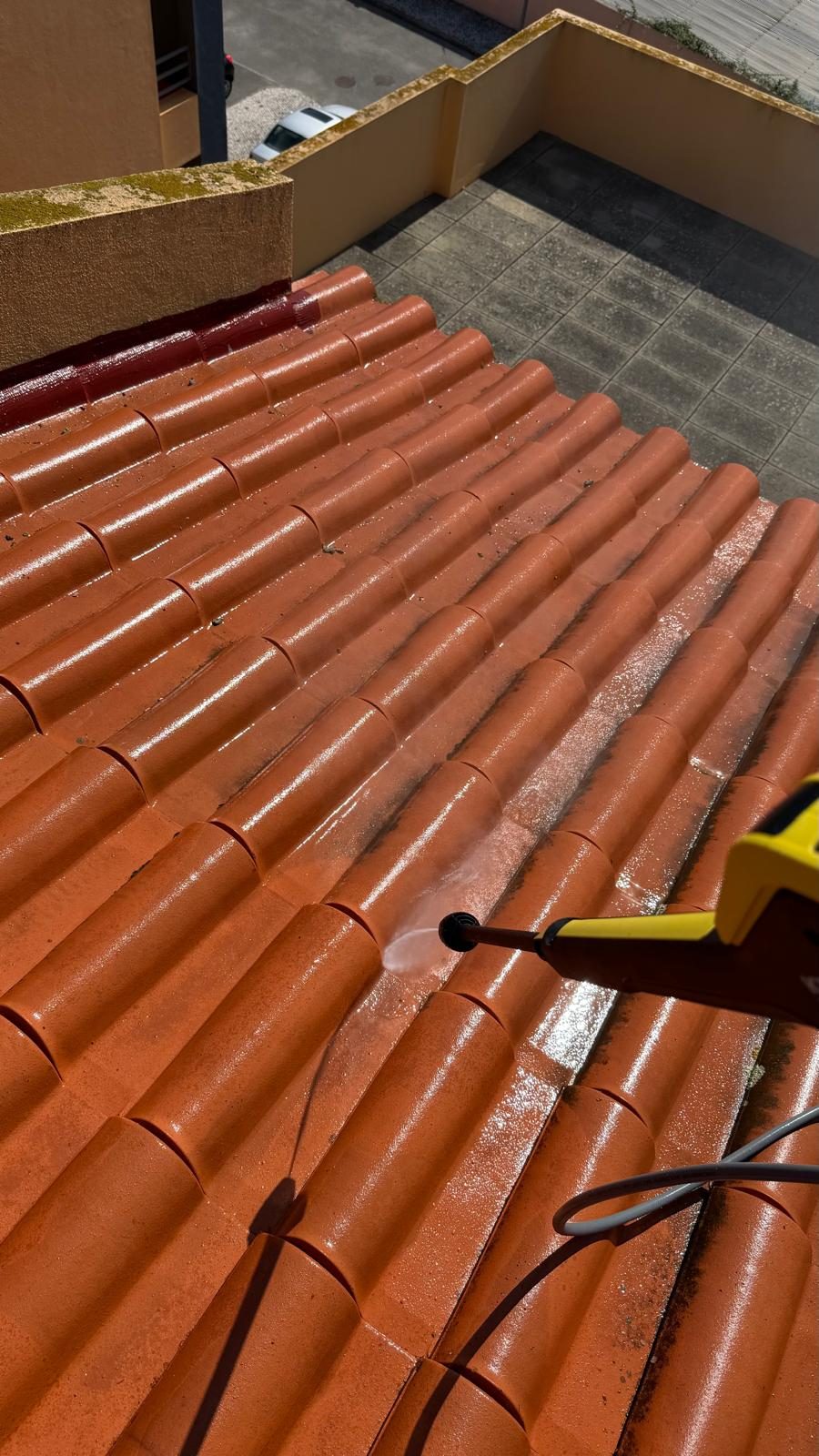
The roof had moss established in every joint and lichen gripping the surface of the tiles, the colour already reduced to a uniform brown. It was cleaned slope by slope, at a pressure set to the condition of the clay, and the gutters were cleared before any of the wash water started to run.
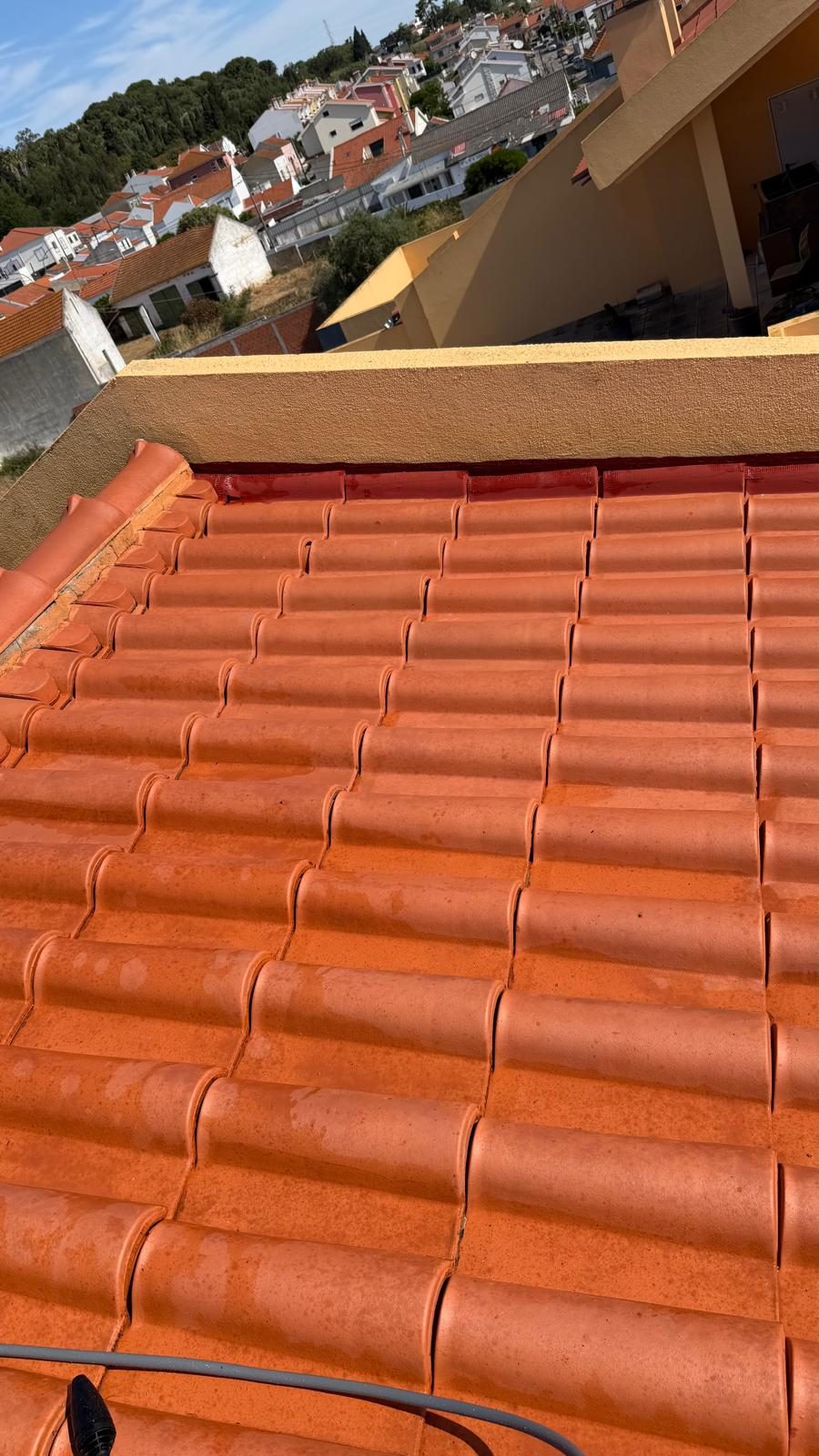
The two photographs are of different slopes of the same roof — which is why the backdrop does not match. There is no matched-frame pair here, and we would rather say so than pretend otherwise.
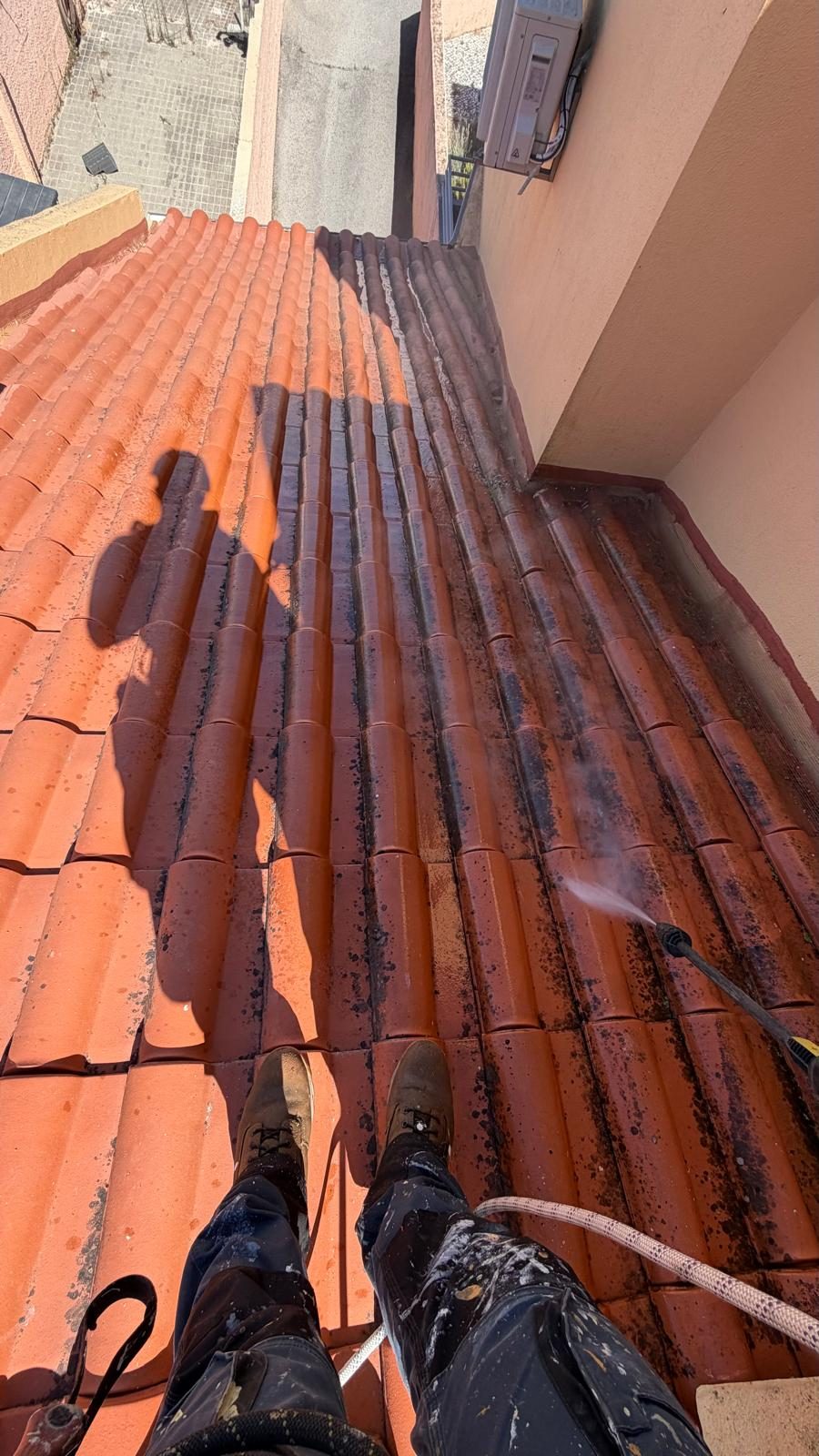
The wash line shows what was there.
This photograph has both at once: on the left, tile that has been cleaned; on the right, the black layer of lichen still gripping the surface and the joints. It is not dirt sitting on top, it is matter rooted in the porosity of the clay — and it is what holds water against the tile right through the winter.
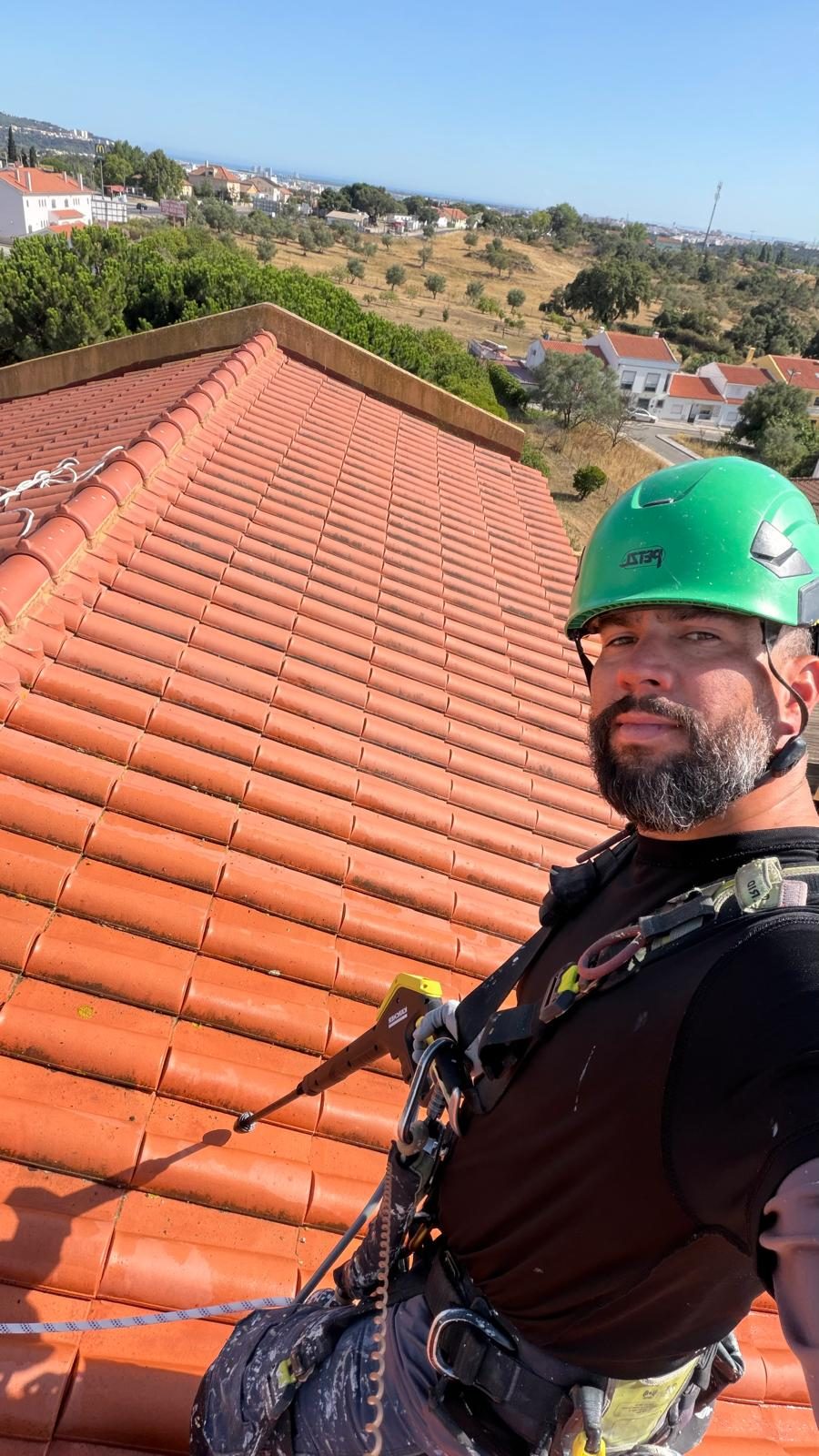
Nobody walks on the tiles without being tied on.
A roof with wet moss on it is one of the most slippery surfaces anyone can work on, and clay tile was never made to take a person's weight wherever they choose to put it. The system is always twin-rope, on independent anchor points, and the load is spread across the areas that will carry it.
Timescales and what drives the quote
We give a preliminary figure from photographs, and a fixed quote itemised by work package after a site visit — always free of charge.
Related services
Hydrophobic treatment
Seals the porosity of the cleaned tile and holds off the return of the moss.
See service →Roof waterproofing
When water is already coming in at the abutment, cleaning the tiles is not enough.
See service →Terrace and paving cleaning
The terrace below the roof usually needs the same pass.
See service →Frequently asked questions about roof cleaning
Doesn't a pressure washer break the tiles?
It does, if it is used the way you would wash paving. The pressure is set to the condition of the clay and applied along the run of the tile, never up under the overlap, which is the movement that lifts the piece and forces the joint. On a tile that is already badly degraded we drop the pressure and accept more passes — it is slower, and it is cheaper than replacing broken tiles.
How long does cleaning a roof take?
The roof of a house is typically cleaned in 1 to 2 working days. On a four- or five-storey building, 2 to 4 days, depending on how the roof is laid out and how it is reached. The exact timescale is set out in the quote.
Will the moss come back?
It will, sooner or later: clay tile is porous and the climate does the rest. A clean done properly takes out the root and not just the green on the surface, which holds it off for a good while. To really slow it down, a hydrophobic treatment goes on after the clean — it seals the porosity and lets the water run off instead of sitting in the tile.
Will this fix a leak?
Not necessarily. Cleaning takes away the matter that holds water and clears the drainage, which deals with a lot of gutter overflow. But if water is already getting in through an open abutment between the tiles and the parapet, the chimney or the gable, the problem is waterproofing and it is dealt with separately.
Do you use chemicals?
Only where the case calls for it, and always with the surroundings protected. Most of the cleaning is mechanical, with water at the right pressure. Where the lichen is deeply rooted a specific treatment is used, with a dwell time and a rinse — and we say so in the quote, not on the doorstep.
Do we have to move out of the house or clear the terrace?
No. All the work is done from outside. We only ask that, on the days given, washing lines and terrace furniture are brought in from the area below the works, and that the windows are kept closed on the slope being worked on.
Can it be done at any time of year?
The cleaning itself copes well with cool weather, as long as there is no strong wind and no risk of frost. What needs dry weather is the hydrophobic treatment, which needs the tiles dry and a clear forecast for the hours that follow. When the two services go together, we plan the work for a settled window.
What if broken tiles turn up?
We show them to you before replacing anything. Broken or slipped pieces are recorded in the survey and in the photographic report, with the count and the location; replacement is quoted separately and only goes ahead once approved.
Send photographs of the roof and get an estimate.
With three or four photographs of the roof, taken from an upstairs window or from outside, we can give a preliminary figure before the site visit even happens.
+351 933 369 927