
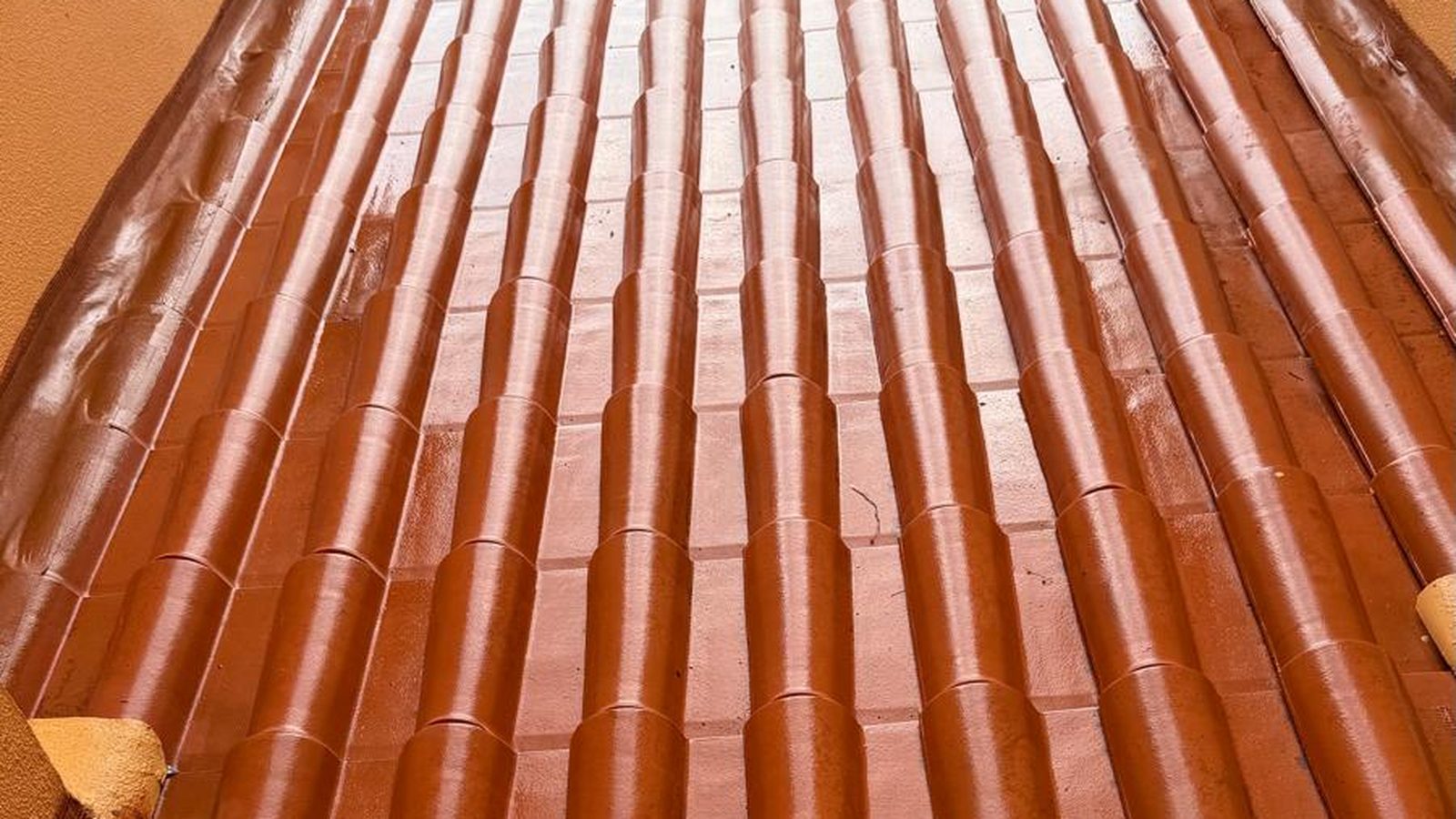
Clay tile absorbs water. A hydrophobic treatment seals the porosity without forming a film.
Clay tile is porous: it drinks rainwater, it is slow to dry, and that retained damp is exactly what feeds moss and lichen. The hydrophobic treatment is colourless — it soaks into the pore and closes it from the inside, with no layer laid over the top, nothing sealing the tile shut, nothing stopping it breathing. It always goes on after washing, onto a dry tile. It is the step that makes the cleaning last.
Site visit and quote with no obligation. We reply within 24 working hours.
What the service covers
When a roof needs a hydrophobic treatment
Washing on its own gives the roof its looks back, but it also gives you an open tile: the pore the dirt was blocking is now exposed and starts drinking water again with the first shower. The hydrophobic treatment closes that pore while the tile is still clean — that is when it pays, not two winters later.
How we work
Washing first, then drying
We do not apply to a dirty tile or a damp one. Over moss, the product seals the dirt in and never reaches the pore; over a wet tile, it does not soak in at all. The roof is washed and then left to dry — typically one to two days of dry weather before application.
Protection and survey
We sheet over gutters, rooflights, panels, openings and parapets, and protect the planting and paving around the building. At the same time we flag any broken or slipped tile: the hydrophobic treatment treats the surface, it does not replace a tile that has stopped keeping water out.
Application to saturation
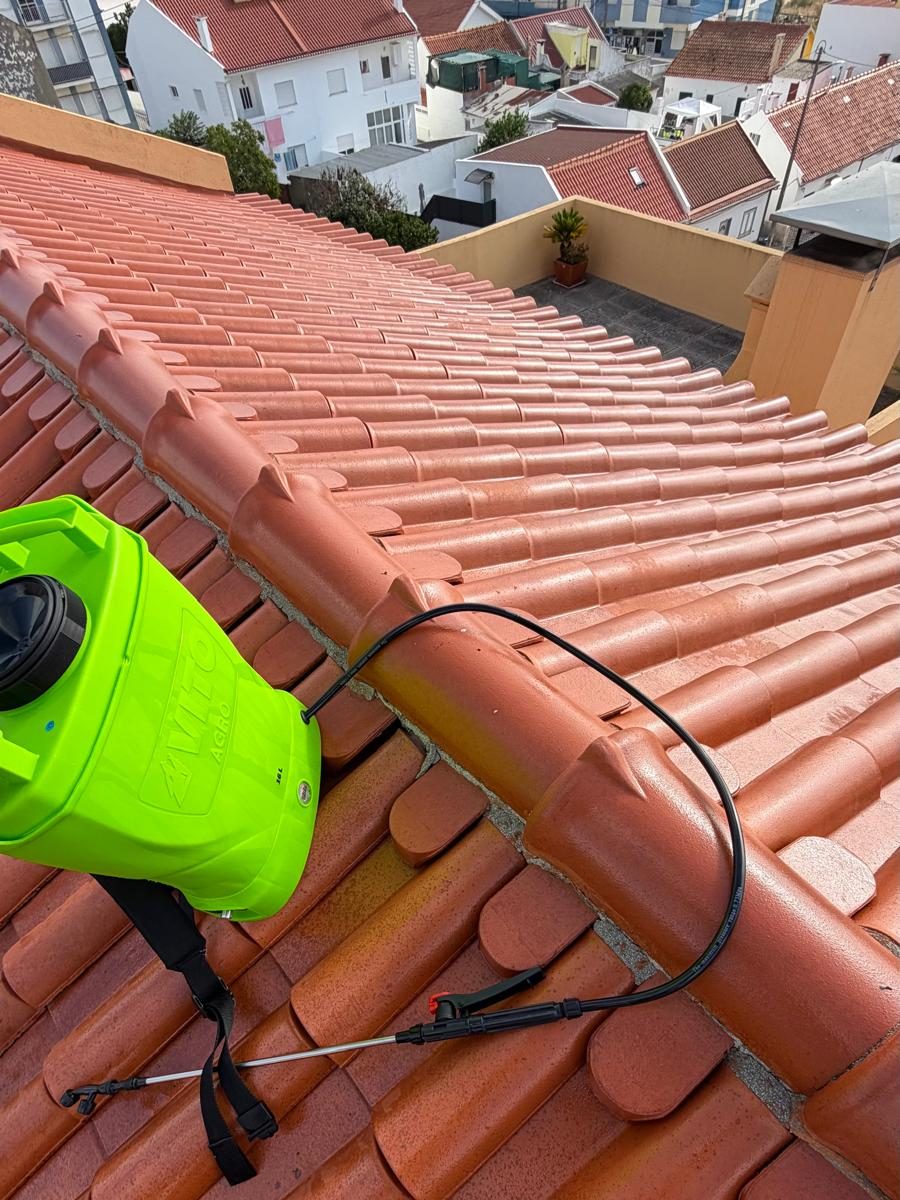
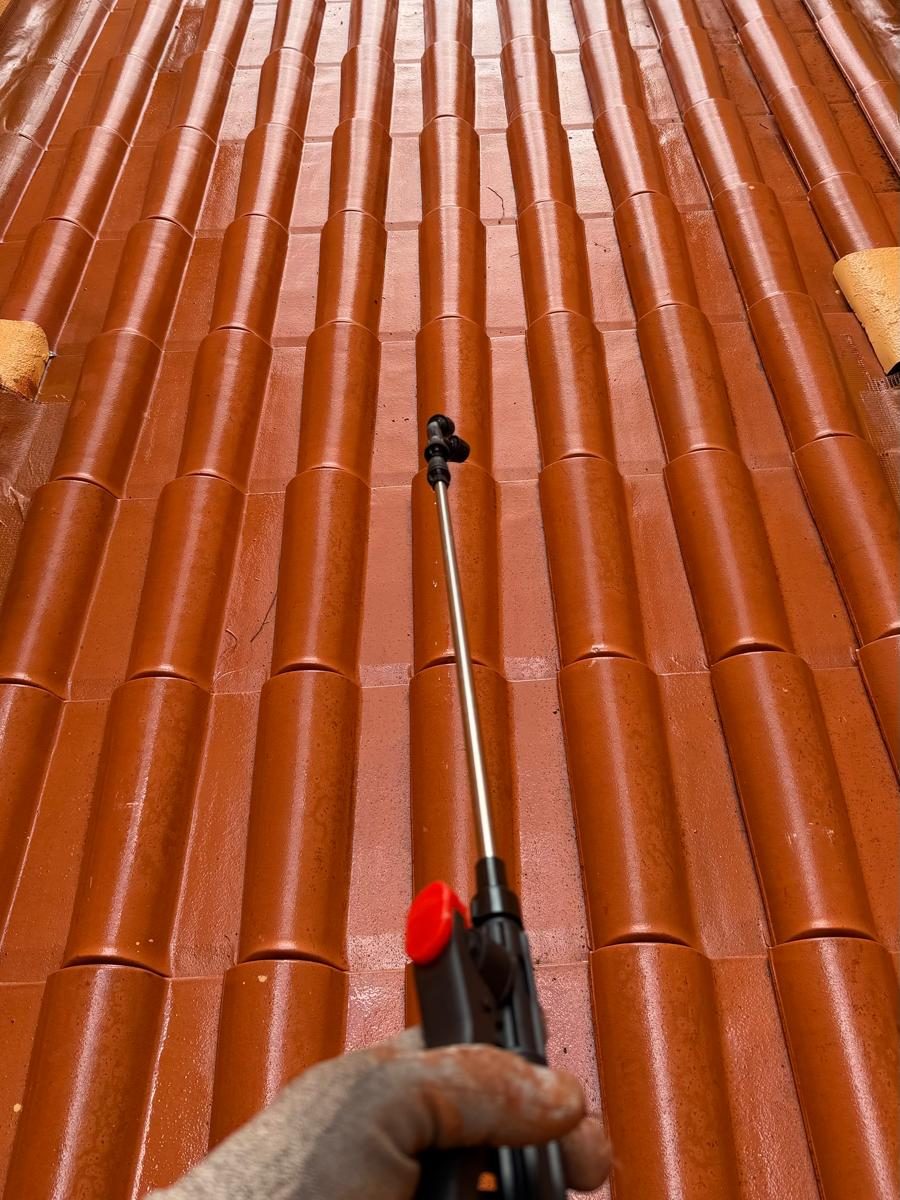
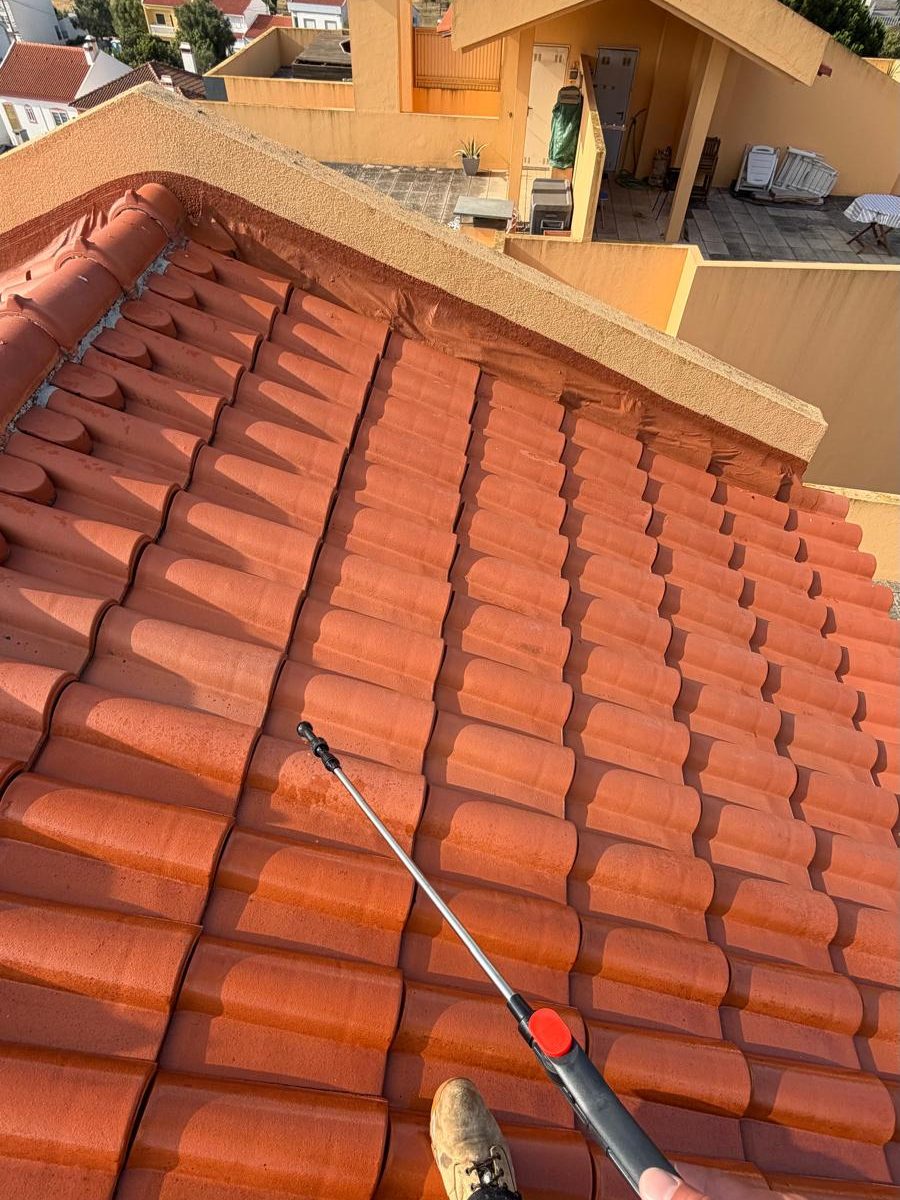
Spray application at low pressure, working from the bottom up, in two coats wet on wet. We work one roof slope at a time, until the tile stops absorbing — the measure is not the clock or the litres, it is the tile ceasing to drink.
Checking and record
Once it has cured, we wet a treated area: the water now beads on the surface instead of darkening the tile. You are left with the photographic report of the areas treated and of the tiles we flagged.
The stages of the application
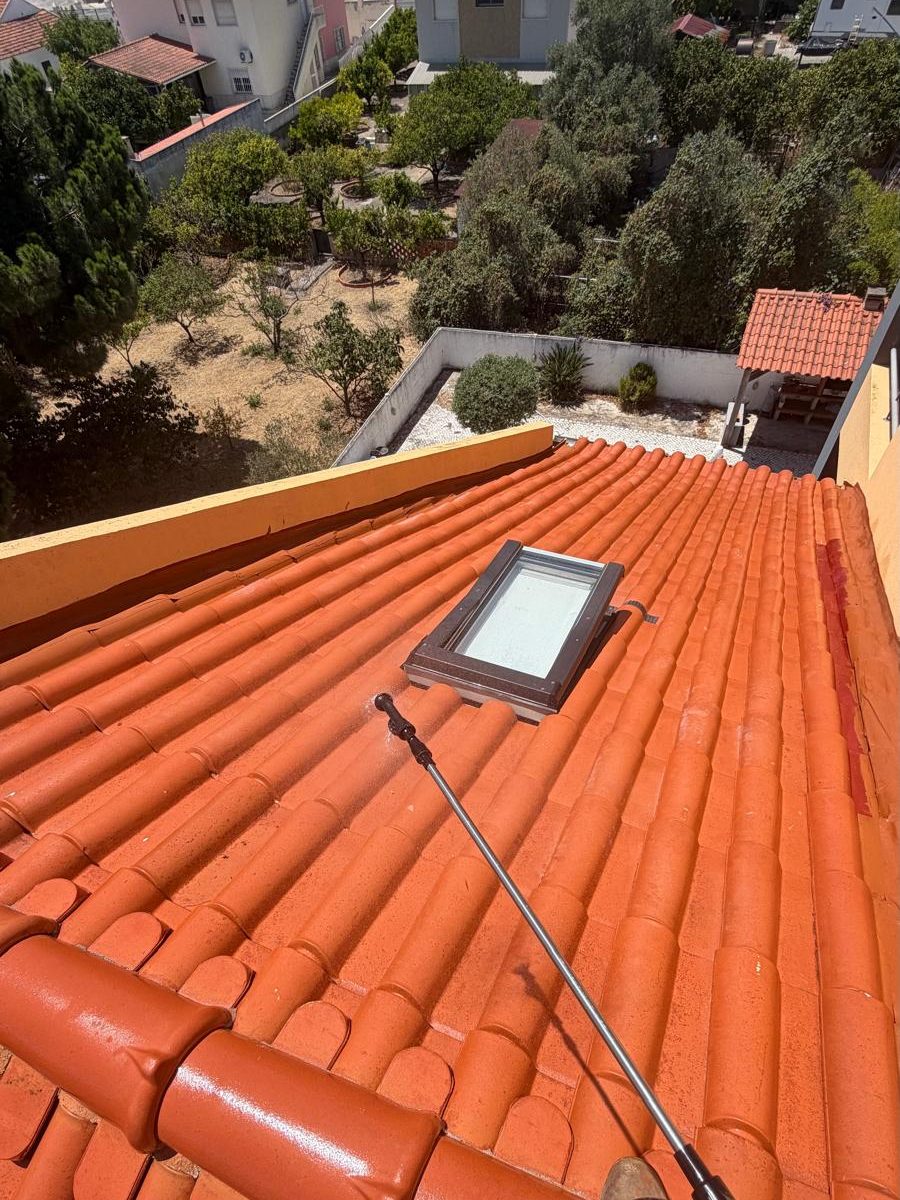
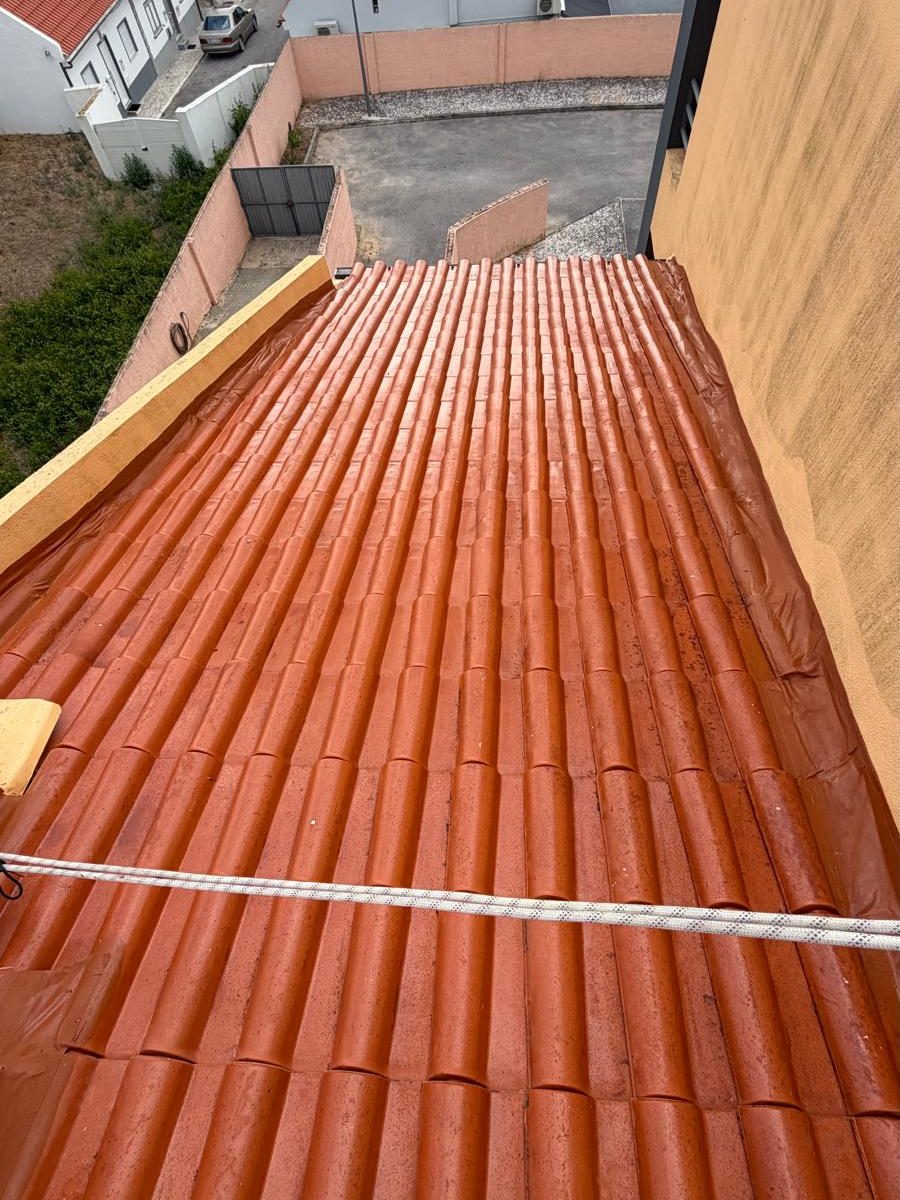
A hydrophobic treatment is not waterproofing.
The hydrophobic treatment works on the surface of the tile: it closes the pore and makes water run off instead of being absorbed. It does not close an open joint, it creates no new barrier where the roof meets the parapet and it does not replace a broken tile. If there is already a stain on the ceiling, the problem is at the abutment — and that is solved with waterproofing, not with a hydrophobic treatment.
Tile wet with product is slippery tile.
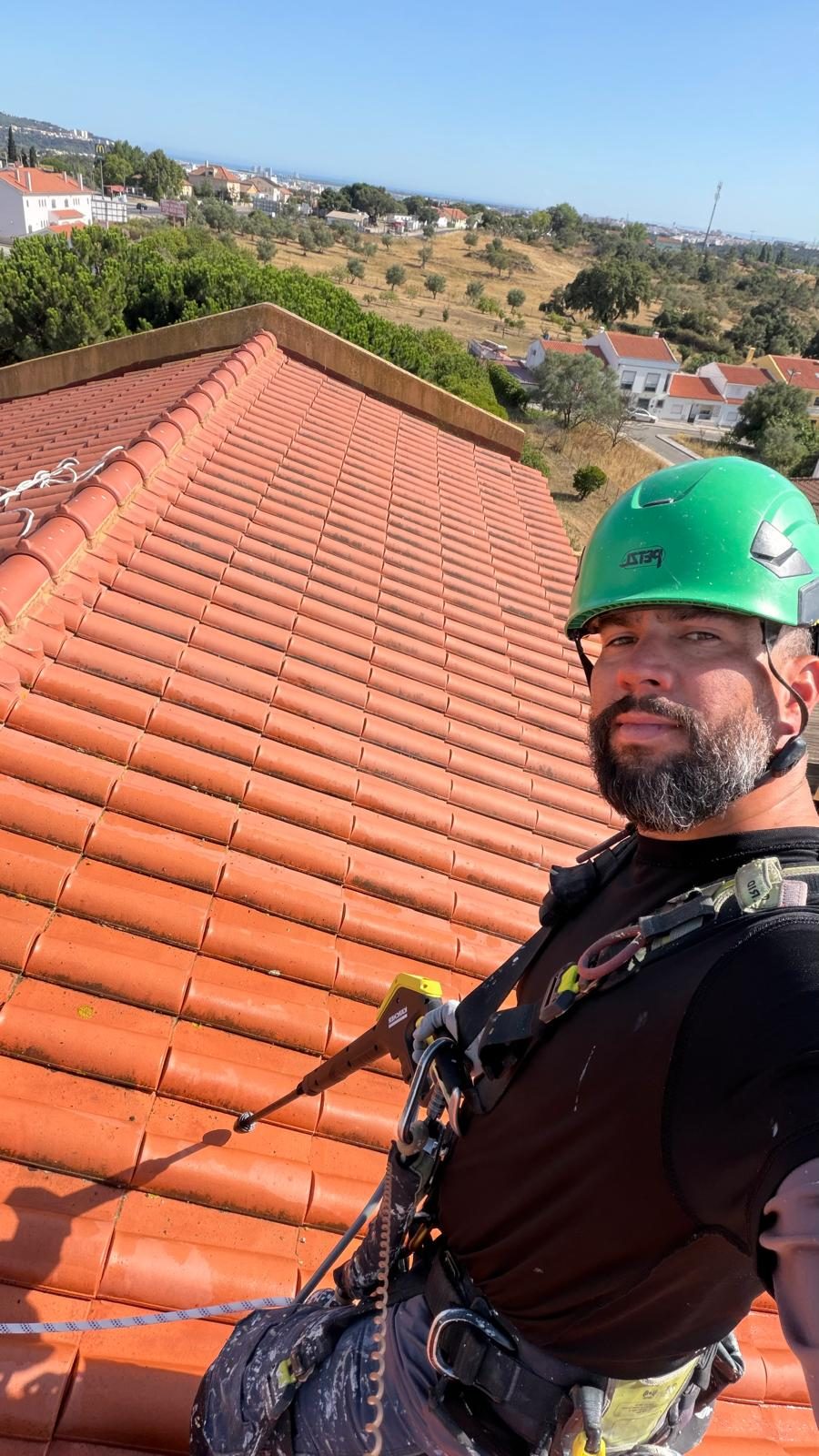
The hydrophobic treatment goes onto tile that has been washed and left to dry, and clay tile was never made to take a person's weight wherever they choose to put it. The team stays tied on from one end of the roof to the other, with the load spread across the areas that will carry it, and the system is always twin-rope, on independent anchor points.
Timescales and what drives the quote
We give a preliminary figure from photographs and a fixed quote after a site visit — always free of charge.
Related services
Roof cleaning
The step that has to come before the hydrophobic treatment. Over a dirty tile, the product never reaches the pore.
See service →Roof waterproofing
For abutments, parapets and chimneys. That is where water is stopped from getting in, not at the surface.
See service →Terrace cleaning
External paving, balconies and flat roofs on the same building, in the same visit.
See service →Frequently asked questions about hydrophobic treatment
Is this the same as painting or varnishing the tiles?
No. A paint or a varnish forms a film over the tile: it changes the colour, closes off the way out for water vapour and, sooner or later, blisters and peels — and then the lot has to be scraped off. The hydrophobic treatment is colourless and works inside the pore: it cuts the liquid water getting in but leaves the tile breathing. There is no layer there to peel.
Does it change the colour of the roof?
It does not change the colour. During the application and for the days that follow the tile carries a deeper tone, the way it does when it is wet, and then it settles. It gives no varnish-like sheen and it will not even out tiles of different shades.
Can it go on without washing the roof first?
No, and this is the most common mistake. Over moss, lichen or dust, the product seals the dirt in instead of soaking into the tile — you have paid for work that protects nothing and that has to be scraped off later. The order is washing, drying and only then the hydrophobic treatment.
How long between the washing and the application?
Long enough for the tile to dry right through — typically one to two days of dry weather in summer, longer outside it. A tile can look dry on the surface and still be saturated inside; the product then fails to penetrate and the work is wasted.
How long does the effect last?
It depends on how exposed the roof is, how porous the tile is and which way the slopes face. In ordinary conditions the water-repellent effect holds for several years — considerably longer than the interval in which moss would come back to a tile that had only been washed. We give a durability figure in the quote, for the roof in question.
Does it really hold off the moss?
It holds off the condition moss needs, which is water sitting at the surface. On a tile that has stopped absorbing, moss and lichen have far more trouble taking hold and coming back. It is not a permanent biocide and it does not stop organic matter landing on the roof — what it does is delay the re-establishment considerably and make the next clean simpler.
Will it fix a leak I already have in the ceiling?
No. A stain on a ceiling almost always comes from an open abutment, a broken tile or a gutter overflowing — and none of that is closed by a surface product. In that case the service you want is roof waterproofing, with the hydrophobic treatment coming afterwards, if it makes sense.
Does it genuinely help with thermal insulation?
It helps, indirectly. A waterlogged tile conducts more heat and is slow to dry; a tile that stays dry behaves closer to the way it was made to behave. It is no substitute for insulation in the roof, but it stops the tile working against it.
Do residents have to move out?
No. All the work is done from outside, on the plane of the roof. We only ask that they close windows and rooflights and bring the washing and the pots in from the balconies on the day of the application.
Send photographs of the roof and tell us whether it has been washed.
With photographs of the slopes and of the state of the tile we can tell you whether the roof is ready for a hydrophobic treatment or needs washing first, and give a preliminary figure before the site visit.
+351 933 369 927